
Modern complex buildings—such as hospitals, data centers, and commercial high-rises—are defined by their intense density of services. The successful integration of Mechanical, Electrical, and Plumbing (MEP) systems is what differentiates a functional building from a maintenance nightmare. Without precise coordination, these systems often compete for the same physical space, leading to conflicts that disrupt construction schedules and inflate project budgets.
Integrating MEP coordination through BIM early in the design phase is the most effective strategy to ensure constructability. By resolving spatial conflicts virtually, we ensure that building performance is maximized while field operations remain streamlined and efficient.
The Critical Role of MEP Integration
In highly serviced buildings, MEP systems often occupy more volume than the structural framework itself. When design is handled in silos—where the structural engineer, HVAC designer, and plumbing contractor work independently—”clashes” are inevitable. These conflicts might include pipes intersecting structural beams, or electrical conduits preventing the installation of ductwork.
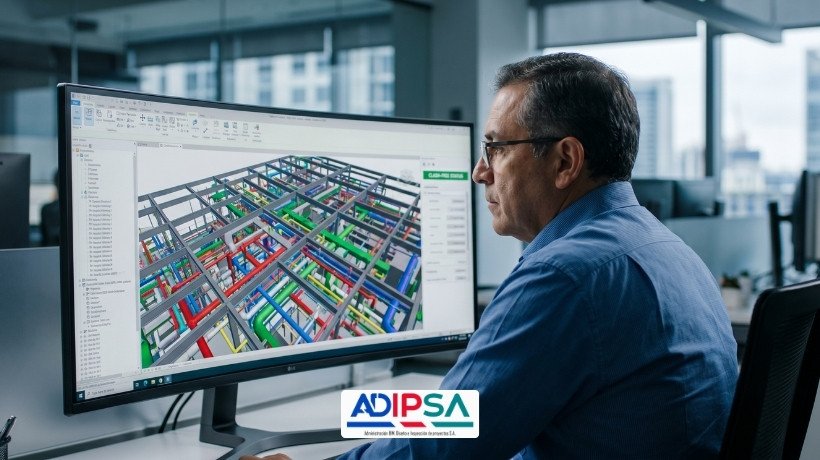
Using advanced BIM coordination services, we consolidate all MEP models into a single, federated environment. This allows us to perform high-precision clash detection, resolving thousands of potential site conflicts before a single piece of material is ordered or installed.
Efficiency Gains Through Integrated BIM Workflows
The efficiency of a complex building isn’t just about avoiding clashes; it’s about optimizing the building’s operational lifecycle. Here is how integrated MEP coordination drives efficiency:
- Reduced Field Rework: By identifying conflicts digitally, you eliminate the need for expensive “cut-and-patch” work on-site, saving thousands of dollars in labor and material waste.
- Optimized Ceiling Plenum Space: Coordination allows us to tighten the design, often reducing floor-to-floor heights, which can lead to significant cost savings in exterior cladding and vertical structures.
- Enhanced Maintainability: A well-coordinated MEP model ensures that critical equipment, valves, and electrical panels are installed with proper clearance for future maintenance, preventing operational headaches for facility managers.
- Accelerated Construction Schedules: By planning the installation sequence virtually, trade contractors can prefabricate components off-site, reducing the time spent on manual field installation.
Bridging the Gap Between Design and Field Installation
For US general contractors and MEP subcontractors, the transition from design to field execution is where projects either succeed or fail. Our role is to provide the shop-level detail that makes installation a plug-and-play process. We don’t just coordinate the systems; we provide the exact 3D coordinates and fabrication-ready data that your installation crews need to hit the ground running.
Whether you are managing a healthcare facility with complex medical gas lines or a data center requiring extensive cooling infrastructure, our integrated engineering approach ensures that structure and MEP systems coexist in total harmony.
Conclusion: Precision as an Operational Asset
Investing in MEP coordination is investing in risk management. A building that is coordinated digitally is a building that is built faster, cheaper, and with far fewer surprises. At Grupo ADIPSA, we specialize in transforming high-complexity designs into high-efficiency realities.
Optimize Your MEP Coordination
Ensure your next project is clash-free and ready for efficient construction.
✉️ Email: info@grupoadipsa.com